
5 Tactics the Guitar World Can Borrow from Publishing to Stand Out in a Crowded Market

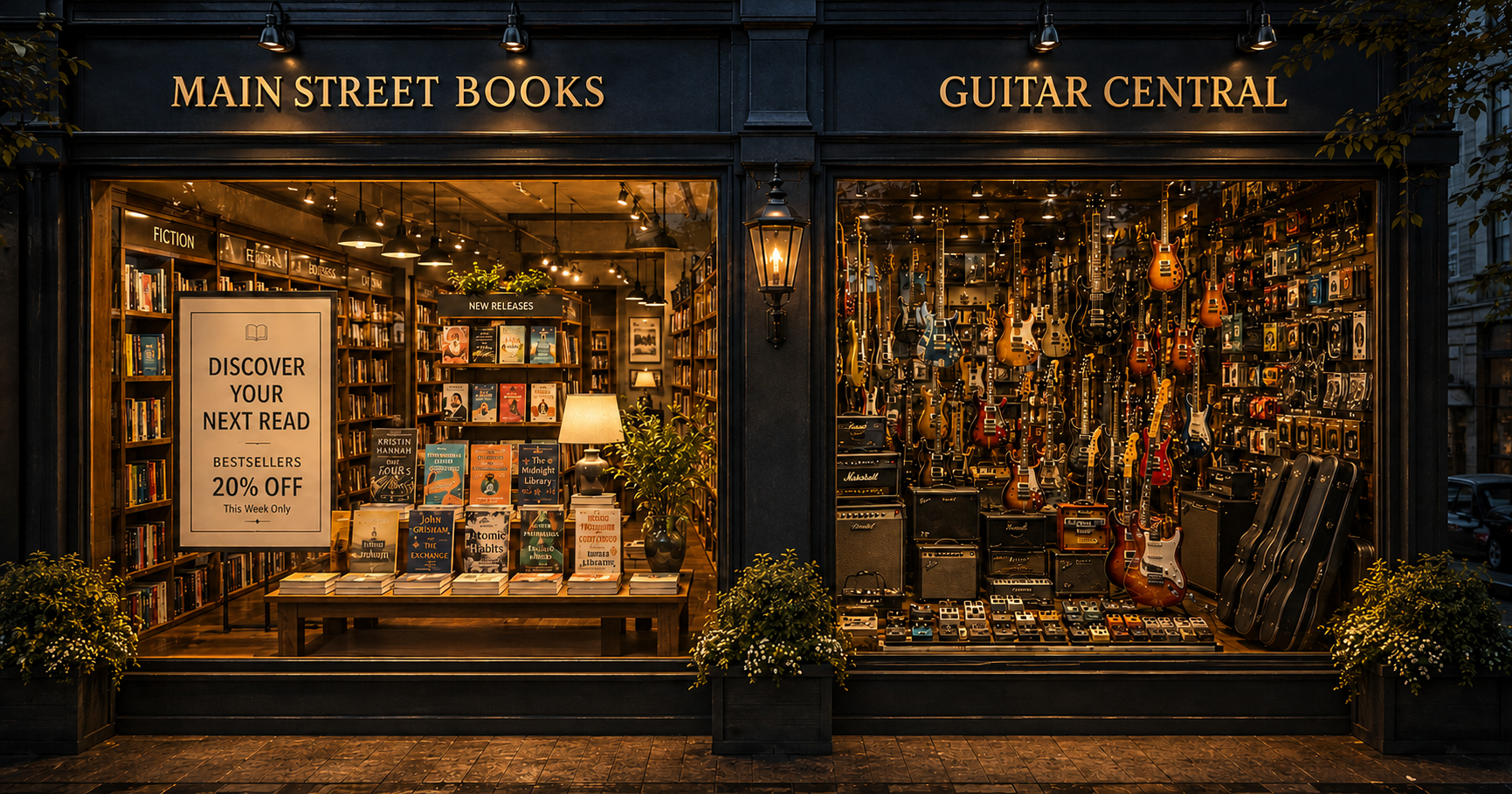
5 Tactics the Guitar World Can Borrow from Publishing to Stand Out in a Crowded Market
The guitar industry has never been more crowded. Boutique luthiers, pickup makers, amp builders, pedal designers, modeling and IR companies, accessory brands, gear shops, dealers — every corner of the category is overflowing with serious craft competing for attention.
Some context: I spent the first 15 years of my career launching books and multimedia products for mass-market publishers like Workman, Chronicle, and Houghton Mifflin Harcourt — leading global multichannel marketing campaigns for franchises like What to Expect When You’re Expecting, Curious George, and Brain Quest — learning the tactics they used to help engineer dozens of New York Times and USA Today bestsellers during the years I worked there. I was lucky enough to work directly under a genuine book industry legend, Peter Workman. They’ve had to wrestle with the same crowded-market problem in a consumer category arguably more competitive than guitar, and one where the creator/brand/retailer/media relationships work almost identically. Some of them have developed a creative approach to standing out — tactics that helped drive national momentum in a category just as flooded with products from skilled artists. So in a business where even the best brands need help standing out, some of these ideas seem like they could be genuinely helpful if translated the right way.
The marketing statistics all brands are sitting on — regardless of industry
Three digital benchmarks worth knowing, because they inform most of what follows:
97% of e-commerce visitors do not buy on the first visit
If you’re not tracking and reaching back out to the vast majority of your traffic, you’re missing a big opportunity.
Only 2-5% of your social media followers are seeing your organic posts
Even followers who chose to follow the brand. Pay for reach, or get buried.
Owned email lists are the #1 highest-converting digital channel: ~5x higher than social
When you want people to take action, your own list will outperform any ad campaign. Your list is the asset. Social is just one way to build it.
Those all point at something bigger: standing out in a crowded market rarely happens by accident, and it rarely happens just by keeping things status quo. The five tactics that follow are about getting more out of every engagement you earn, treating retail and dealer relationships like the leverage points they are, designing campaigns that activate multiple channels and audiences simultaneously, and turning artist and brand collaborations into real campaigns, all feeding one continuously growing system.
1. Capture the players who don't buy on their first visit.
Most brands spend real money driving traffic to their sites — paid social, search, PR, content — but very little of it converts on first contact. That's where the real opportunity sits. The campaign after the campaign — built specifically for visitors who didn't buy — is where most of the conversion lift lives.
Done right, retargeting isn't an afterthought to acquisition — it's its own campaign, with its own creative, messaging, and offers built around what the visitor was actually looking at. The payoff compounds across the marketing program: paid social works harder, search performs better, PR placements drive longer-tail engagement, and email and SEO start reinforcing each other instead of running in separate lanes. And if a visitor still doesn't buy, capturing their email is the next best thing — every future touch then costs a fraction of what it costs to keep paying for impressions.
2. Market to your dealers as hard as you market to your customers.
Peter Workman published dozens of #1 global bestsellers across his various imprints. He knew booksellers around the country by name. He was also the kind of mad genius who personally reviewed every piece of marketing creative, fully mocked-up in 3-D, and half his ideas were so big they were unrealistic to execute, but sometimes he made us do them anyway — including one campaign that had the marketing team unwrapping hundreds of Hershey bars, then rewrapping them with custom "Workman Backlist Bar" labels, inserting scratch-off tickets, and shipping them to bookstores nationwide. Under each wrapper was a scratch-off ticket revealing a random discount offer on backlist orders. Plus five bars had golden tickets — Willy Wonka style — and the winning bookstore got a lifetime discount and a catered event. The orders it generated far outweighed the money he spent in manpower executing it.
Retail marketing campaigns are a big focus of every publishing launch — beyond arming sales reps with product brochures and other promo materials, there’s a separate campaign targeting store management well before any consumer marketing happens. They’re the ones who place the orders, decide what gets featured, what staff prioritizes, what the event calendar looks like, and what signage goes up next to the register. Done well, it can move the needle on sales more than any consumer ad campaign — and it usually starts 6+ months before anything ships.
Obviously plenty of brands in the guitar world invest in dealer relationships, product education and training materials, registration programs, and I’m sure discount terms are used as incentives. But even the best examples I've seen are missing a key layer: they’re mostly focused on gathering info from players after they’ve already purchased. But when you think of all the players walking in, trying guitars out, and walking out without leaving a name, you realize how much more could still be done. The next idea is one possible place to start.
3. Make retail displays do more than display.
Plenty of guitar and gear brands already invest in beautiful permanent retail displays. QR codes are everywhere — on hang tags, on signage, sometimes on the displays themselves. The codes are the easy part. What's still rare is a structured audience growth system underneath them.
Some of the best display programs I worked on in publishing took a deliberate loss on the initial order to lock in permanent retail space and years of reorders. That part isn't unusual — brands in the guitar world likely do the same. What set those programs apart was what the displays carried. The signage was always swappable, which gave us a reason to mail stores fresh materials throughout the year. Every piece included a clear call to action driving traffic to custom landing pages we'd built — pages designed to do real work: deeper product information, multimedia content, contest entries, and as much email capture as we could pull in. The list those programs built was the real long-term payoff. It powered the next campaign, and the campaign after that, and the one after that.
The guitar version: every guitar or piece of gear in a brand's dealer display gets a small QR code, pointing to a page built just for that model — specs, demos, artist video, a contest entry or free download. The page knows which dealer the scan came from. Every display becomes a lead-generation point. The brand sees which models pull players in, which dealers drive the most interest, and which players need more nurturing before they buy. The list serves the dealer relationship — it doesn't replace it.
4. Design one campaign that activates every audience at once.
At Houghton Mifflin Harcourt I worked on a Curious George partnership with First Book, the nonprofit that puts new books in the hands of kids in under-resourced communities. Every stamp earned in a passport-style activation triggered a book donation. That single campaign activated five audiences at once: consumers had a reason to participate, retailers dedicated floor space (foot traffic and press came with it), educators had curriculum-aligned events, media had a substantive philanthropic story beyond product, and First Book got fundraising lift and a major brand alignment. Most campaigns engage one audience at a time. The good ones engage four or five with the same mechanic.
I could see a pickup brand running a "best bedroom players" contest with a real prize — as simple as a free online lesson with one of their top sponsored artists, or a giveaway package with donations from their partner brands — open to anyone using the brand's pickups. Video submissions go through dealer-specific links — a portion of the prize pool flows back to shops whose customers submit the most entries. A portion of proceeds funds music education in under-resourced schools. Players have a reason to buy. Dealers have skin in the game. Media has a philanthropic story. The brand walks away with a list of engaged players they can reach back out to anytime, organic media attention, and tons of new video content featuring their pickups that can be repurposed in other campaigns.
5. Turn your sponsored artists into a marketing engine, not just an endorsement deal.
Every book launch I worked on included a coordinated plan for the author's existing audience. We'd produce author-specific promo tools — branded postcards, posters, bookmarks, signing-tour materials, mini-sites with exclusive content — designed to drive the author's fanbase into the book's launch ecosystem. Every touchpoint was a capture opportunity, and activating the author's audience was treated as half the work of launching the book.
The typical setup with artists: sign them, give them gear, put logos on their websites, and assume product will move. Andy Wood put it well in a recent conversation:
"Never forget that the artist endorses the gear, not the other way around. Just because a company gives you a discount or free gear—or even puts you on their website—that doesn't mean the general listener will be invested in you and your music. Inversely, if you put out killer stuff that connects with the target audience or general public, then everyone will care about the tools you used to make the art."
An endorsement isn't a substitute for demand. Signing the artist is the start of the work, not the end. The businesses that get full value treat each artist as a distribution channel — a unique landing page for every artist, exclusive content behind an email sign-up, tour-stop materials driving fans to a date-specific page, co-marketed sends through the artist's own list. Every fan who interacts becomes part of an artist-segmented audience the brand owns. The artist gets a real return too: their fans get something exclusive, and they're plugged into a brand actively investing in their reach.
A parting thought
The majority of guitar marketing follows the “here’s a cool product” formula, with very basic information, that doesn’t give players any reason to take action. With attention spans shrinking and so much competition for their attention, marketing should always give players a reason to engage — not just look and listen. Brands and shops who think outside the box, put more value on every click and view they earn, build campaigns that keep feeding and growing their email list over time, and give potential customers clear, straightforward offers and incentives will be the ones who stand the test of time. Players have so many options these days, if you want to stand out, you may have to learn how to channel your inner Peter Workman.
